الكلام والأرقام اللي مكتوبة على جنب الكاوتش دي مش زخرفة ولا اسم موديل. دي كارنيه الكاوتشة: بتقولك المقاس، وبتشيل كام كيلو، ومتحملة سرعة قد إيه، والأهم من ده كله — اتعملت إمتى.
لو عرفت تقراها، مش هتحتاج حد يقنعك بحاجة. هتبص على الجنب وتعرف بنفسك الكاوتشة دي تنفع لعربيتك ولا لأ. تعالى نفصصها حتة حتة.
ابدأ من المقاس
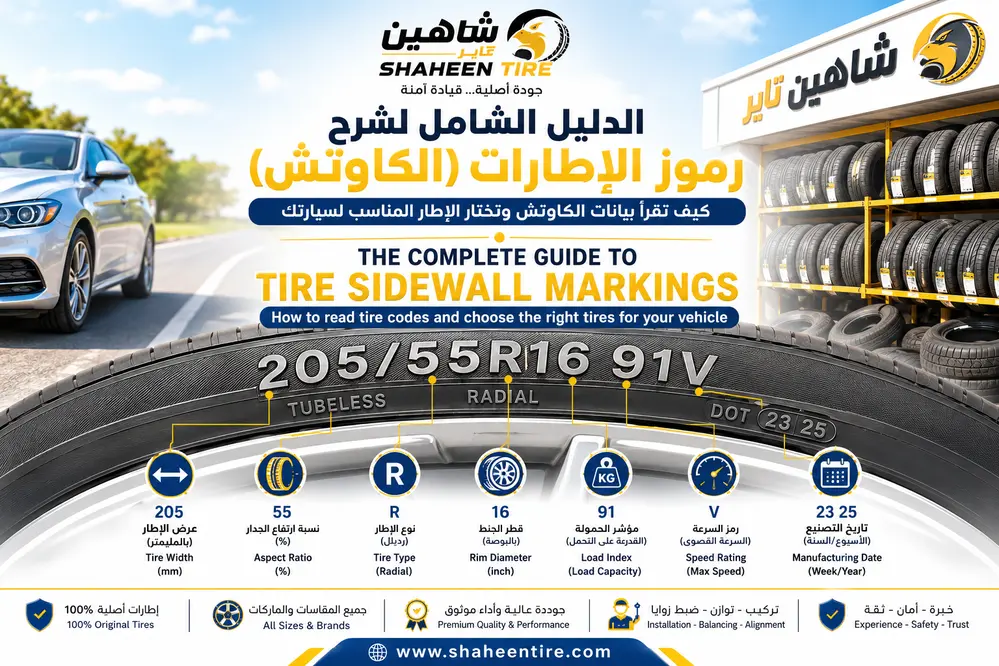
أكبر وأوضح حاجة مكتوبة على الجنب هي المقاس، وشكله كده:
205/55 R16 91 V
خمس معلومات ورا بعض:
| الجزء | معناه | في المثال ده |
|---|---|---|
| 205 | عرض الكاوتشة بالمليمتر | عرضها 205 مم |
| 55 | نسبة ارتفاع الجنب لعرض الكاوتشة | ارتفاع الجنب = 55% من 205، يعني حوالي 113 مم |
| R | نوع التصنيع: Radial | راديال، وده اللي كل العربيات الحديثة ماشية بيه |
| 16 | قطر الجنط بالبوصة | تركب على جنط 16 |
| 91 V | الـ Load Index وبعده الـ | بتشيل 615 كيلو، ومتحملة لحد 240 كم/س |
قبل ما تنزل تشتري، صوّر جنب الكاوتشة اللي عندك دلوقتي بموبايلك. أوفر عليك كلام كتير في المحل، وأضمن إنك ترجع بالمقاس الصح.
يعني إيه العرض والارتفاع والجنط؟
الرقم الأول: العرض
ده عرض الكاوتشة بالمليمتر وهي مركّبة ومنفوخة. كل ما العرض زاد، كل ما المساحة اللي بتلمس الأسفلت زادت والفرملة والتحكم بيتحسنوا شوية — بس بتاكل بنزين أكتر شوية كمان، ولو زوّدت أكتر من اللازم ممكن تحك في الرفرف.
الرقم التاني: نسبة الارتفاع
خلي بالك، ده مش قياس، ده نسبة مئوية. الـ 55 معناها إن ارتفاع جنب الكاوتشة = 55% من عرضها. الرقم الصغير (45 مثلاً) يعني جنب واطي وناشف: العربية بتمسك الطريق أحسن بس بتحس بكل مطب. والرقم الكبير (65 أو 70) يعني جنب عالي: راحة أكتر وحماية أحسن للجنط من الحفر، وده كلام له وزنه على شوارعنا.
حرف الـ R
معناه Radial، وده نظام تصنيع الكاوتشة من جوه. ساعات نادرة تلاقي حرف D يعني Diagonal (بياس). المهم: متركّبش نوعين مختلفين على نفس العربية.
الرقم التالت: الجنط
ده الرقم الوحيد اللي مفيش فيه اجتهاد. كاوتش 16 يركب على جنط 16 وبس. وخد بالك إن الرقم ده بالبوصة بينما العرض بالمليمتر — دي حاجة قديمة في المواصفة نفسها، مش غلطة مطبعية.
الـ Load Index: الرقم اللي بيشيل العربية
الـ مش وزن، ده كود. رقم 91 مش معناه 91 كيلو ولا 91 حاجة. ده رقم بتدوّر عليه في جدول عالمي موحّد، والجدول هو اللي بيقولك الكاوتشة الواحدة بتشيل كام. رقم 91 يعني 615 كيلو للكاوتشة الواحدة.
اضرب في 4 تعرف الطقم كله بيشيل كام. والرقم اللي عربيتك محتاجاه مكتوب على لوحة صغيرة جوه باب السواق أو في كتالوج العربية.
| Load Index | أقصى حمل للكاوتشة الواحدة (كجم) |
|---|---|
| 75 | 387 |
| 76 | 400 |
| 77 | 412 |
| 78 | 425 |
| 79 | 437 |
| 80 | 450 |
| 81 | 462 |
| 82 | 475 |
| 83 | 487 |
| 84 | 500 |
| 85 | 515 |
| 86 | 530 |
| 87 | 545 |
| 88 | 560 |
| 89 | 580 |
| 90 | 600 |
| 91 | 615 |
| 92 | 630 |
| 93 | 650 |
| 94 | 670 |
| 95 | 690 |
| 96 | 710 |
| 97 | 730 |
| 98 | 750 |
| 99 | 775 |
| 100 | 800 |
| 101 | 825 |
| 102 | 850 |
| 103 | 875 |
| 104 | 900 |
| 105 | 925 |
في أرقام أقل من 75 وأكتر من 105، بتلاقيها على العربيات الصغيرة أوي وعلى النقل الخفيف والفانات. لو كاوتشك رقمها بره الجدول ده، اسألنا وهنقولك الرقم بالظبط من الجدول الرسمي.
تزوّد في الـ Load Index: عادي وماشي. تنقّص فيه: لأ خالص. لو عربيتك عايزة 91 والبياع مديك 88، ده معناه 55 كيلو ناقصة في كل عجلة، يعني 220 كيلو ناقصة من العربية كلها. وده بيبان في الصيف وإنت محمّل ورايح الساحل.
الـ Speed Rating: الحرف اللي بعد الرقم
الحرف ده بيقول أقصى سرعة الكاوتشة متصممة ومتختبرة عليها وهي شايلة حمولتها كاملة. مش معناه إنك تمشي بالسرعة دي، بس معناه إن الكاوتشة متعمولة إزاي من جوه — كل ما الحرف أعلى، كل ما التركيب أقوى والخامة أنشف.
| الرمز | أقصى سرعة |
|---|---|
| L | 120 كم/س |
| M | 130 كم/س |
| N | 140 كم/س |
| P | 150 كم/س |
| Q | 160 كم/س |
| R | 170 كم/س |
| S | 180 كم/س |
| T | 190 كم/س |
| U | 200 كم/س |
| H | 210 كم/س |
| V | 240 كم/س |
| W | 270 كم/س |
| Y | 300 كم/س |
| (Y) | أعلى من 300 كم/س |
حاجتين الناس بتتلخبط فيهم هنا:
- الحروف مش مترتبة أبجدياً. الـ H واقف بين U و V، وده سببه إن الجدول اتوسّع على مراحل عبر السنين.
- ZR مش حرف سرعة ومش موجود في الجدول ده. الـ ZR في المقاس معناها إن الكاوتشة متصممة لسرعات فوق 240 كم/س، والسرعة الحقيقية بتيجي من حرف الـ W أو Y اللي بعدها.
أغلب العربيات اللي ماشية في مصر جايه من المصنع بكاوتش T أو H أو V. خد نفس اللي الشركة حطّته أو أعلى منه، ومتنزلش تحته.
يعني إيه XL و Reinforced؟
لو لقيت كلمة XL أو Reinforced جنب المقاس، دول اسمين لحاجة واحدة: كاوتشة هيكلها مقوّى، بتشيل وزن أكبر من العادي في نفس المقاس، وبتشتغل بضغط هوا أعلى. وطبعاً الـ Load Index بتاعها بيكون أعلى من الكاوتشة العادية بنفس المقاس.
- SL — Standard Load، النسخة العادية، وغالباً مش بتتكتب أصلاً.
- C أو LT — كاوتش نقل خفيف وفانات. بيكون عليه رقمين حمولة: واحد للعجلة المفردة وواحد للعجلة المزدوجة.
- MAX LOAD — نفس الحمولة بس مكتوبة صريح بالكيلو والباوند، وجنبها الضغط اللي الرقم ده صالح عنده.
لو عربيتك جاية من المصنع بكاوتش XL، غيّرها بـ XL. النسخة العادية بنفس المقاس مش هتشيل نفس الوزن.
الـ DOT: أهم حاجة تبص عليها قبل ما تدفع
الـ هو رقم تعريف الكاوتشة، وبيقولك المصنع والبلد… بس اللي يهمك إنت هو آخر 4 أرقام: أول رقمين = الأسبوع، وآخر رقمين = السنة.
- 2521 — الأسبوع 25 من سنة 2021
- 0824 — الأسبوع 8 من سنة 2024
- 4919 — الأسبوع 49 من سنة 2019
ودي أهم علامة على الكاوتشة كلها، وهي بالظبط اللي أغلب الناس بتعدّي عليها. الكاوتش بيقدم مع الوقت حتى لو مركنة في مخزن ومحدش مشي عليها متر واحد. كاوتشة قاعدة 4 سنين في مخزن هي كاوتشة عمرها 4 سنين، حتى لو نقشتها كاملة وشكلها زيرو. والحرارة بتسرّع ده، وصيفنا في مصر مش رحيم.
اسأل على تاريخ الصنع قبل ما تدفع، مش بعد ما يركّب. واطلب تشوفه على الأربع كاوتشات مش واحدة. عندنا في شاهين تاير هنوريهولك بنفسنا على أي كاوتشة في المحل.
معلومة تنفعك: الكود الكامل مطلوب على جنب واحد بس من الكاوتشة. فلو مش لاقي التاريخ، لف على الجنب التاني.
Treadwear و Traction و Temperature
التلات درجات دول نظام أمريكي اسمه UTQG، وبتلاقيهم مكتوبين كده: TREADWEAR 400 TRACTION A TEMPERATURE A.
| الدرجة | المقياس | بتقيس إيه |
|---|---|---|
| رقم، غالباً من 100 لـ 800 | العمر المتوقع للنقشة مقارنة بكاوتشة مرجعية درجتها 100. يعني 400 المفروض تعيش 4 أضعافها في نفس الاختبار. | |
| Traction | AA ثم A ثم B ثم C (الـ AA أحسن حاجة) | قوة الفرملة على أرض مبلولة. مش بتقيس اللفّ ولا الفرملة الناشفة. |
| Temperature | A ثم B ثم C (الـ A أحسن حاجة) | مقاومة الكاوتشة للسخونة على السرعات العالية. في بلد حرّها زي بلدنا، الدرجة دي تستاهل تبص عليها. |
بس خلي بالك من حاجة: رقم الـ Treadwear كل شركة بتحطّه من اختباراتها هي. يعني ينفع تقارن بيه بين موديلين من نفس الماركة، لكن المقارنة بيه بين ماركتين مختلفتين مش مضمونة. أما الـ Traction والـ Temperature فمعايرهم ثابتة، وبتنفع للمقارنة أكتر.
Tubeless ولا چامبرى؟
لو مكتوب TUBELESS أو TL، يبقى الكاوتشة بتقفل على الجنط بنفسها ومش عايزة چامبر. وده حال كل كاوتش الملاكي الحديث تقريباً. ولو مكتوب TUBE TYPE أو TT، يبقى لازم چامبر جواها.
وأهم نقطة هنا: متحطّش چامبر جوه كاوتشة عشان تسكّت خرم أو نفخة. النوعين متصنّعين بشكل مختلف من جوه، والخلط بينهم بيولّد حرارة جوه الكاوتشة وممكن ينتهي بانفجار وإنت ماشي.
الضغط المكتوب على الكاوتش مش ضغط عربيتك
هتلاقي على الجنب حاجة زي MAX. PRESS. 350 kPa (51 PSI). الرقم ده هو أقصى ضغط هيكل الكاوتشة يستحمله — مش الضغط اللي تنفخ بيه.
ضغط عربيتك بيجي من العربية نفسها مش من الكاوتشة: اللوحة اللي جوه باب السواق، أو جوه باب تانك البنزين، أو في الكتالوج. وغالباً هتلاقي رقمين: واحد عادي وواحد أعلى للعربية وهي محمّلة بالكامل.
اقيس الهوا والكاوتش بارد، يعني قبل ما تمشي مش بعد ساعة سواقة. ونقص الهوا هو السبب الأول لتلف الكاوتش، ومع الكاوتش الواطي الحديث مش بتلاحظه بعينك غير لما يكون نقص خلاص.
الـ TWI: إمتى الكاوتشة تكون خلصت
الـ TWI اختصار Tread Wear Indicator، يعني مؤشر الأكل. دوّر على مثلثات صغيرة أو حروف TWI أو علامة الماركة موزّعة على كتف الكاوتشة. امشي من العلامة دي لجوه النقشة، هتلاقي لسان مطاط ناتي في قاع المجرى.
اللسان ده واقف عند عمق 1.6 مم، وده الحد الأدنى المتعارف عليه عالمياً. أول ما سطح النقشة يوصل ويبقى في مستوى اللسان ده، تبقى الكاوتشة خلصت شغل ولازم تتغيّر. مسافة الفرملة على الأرض المبلولة بتزيد بشكل بشع في آخر مليمترين، من غير ما الكاوتشة تبقى "صلعا" في نظرك.
لو بتسوق كتير في المطر أو على الطريق السريع، متستناش لحد ما توصل للسان ده. أغلب المصانع بتنصح بالتغيير قبل الـ 1.6 مم بفترة.
اتجاه الدوران و Outside
في كاوتش بيتركب بشكل واحد بس، والجنب بيقولك عليه:
- ROTATION وجنبها سهم — نقشة اتجاهية. السهم لازم يكون في اتجاه دوران العجلة والعربية ماشية قدام. لو اتركّبت بالعكس، النقشة بتبقى شغالة عكس وظيفتها في طرد المياه، والفرملة في المطر بتقلّ بوضوح.
- OUTSIDE و INSIDE — نقشة غير متماثلة. الوش المكتوب عليه OUTSIDE لازم يبقى بره ناحية بعيد عن العربية.
الغلط ده بيحصل بسهولة والفني مستعجل. لف حوالين العربية وبص على الأربع كاوتشات قبل ما تمشي — دقيقة واحدة بس.
علامات صغيرة تانية على الجنب
- M+S — يعني Mud and Snow، وصف لشكل النقشة بس، والشركة بتكتبه بنفسها. مش نتيجة اختبار.
- 3PMSF (جبل بتلات قمم وجواه ندفة تلج) — ده بالعكس، مش بيتكتب غير لما الكاوتشة تعدّي اختبار رسمي على التلج. عندنا في مصر مالوش لزمة عملياً، بس يهمك تعرف الفرق لو بتتفرج على بضاعة مستوردة.
- A/T و M/T و H/T — كاوتش الـ SUV والدفع الرباعي: All Terrain و Mud Terrain و Highway Terrain، والفرق بينهم توازن بين الطين والرملة من ناحية، والهدوء والراحة على الأسفلت من الناحية التانية.
- MFS أو FR — حرف مطاط بارز بيحمي الجنط من الرصيف.
- RUN FLAT أو RFT أو ZP — جنب مقوّى بيخليك تكمّل مسافة محدودة وبسرعة قليلة بعد ما الهوا يخرج. متركّبهاش غير لو عربيتك أصلاً جاية بيها.
- Made in — بلد التصنيع، ومش شرط تكون نفس بلد الماركة.
اقرا كاوتشك في دقيقة
- هات المقاس كامل بخمس أجزائه، وميهمكش تسيب الـ Load Index والحرف.
- افتح باب السواق واقرا اللوحة، وقارن المقاس ورقم الحمولة. لازم يطابقوا.
- دوّر على الـ DOT واقرا آخر 4 أرقام — دلوقتي عرفت عمر الكاوتشة.
- بص على كتف الكاوتشة، دوّر على علامات الـ TWI وشوف النقشة قربت منها قد إيه.
- اقيس ضغط الهوا والكاوتش بارد، وقارنه باللوحة مش بالرقم المكتوب على الجنب.
غلطات بنشوفها كل يوم
- الشرا بالسعر والمقاس بس. كاوتشتين بنفس مقاس 205/55R16 ممكن يكونوا مختلفين في الحمولة والسرعة وتاريخ الصنع.
- تنزيل الـ Load Index عشان توفّر شوية. ده الرقم الوحيد اللي مينفعش ينزل أبداً.
- عدم السؤال على التاريخ. كاوتشة رخيصة متصنّعة من 5 سنين مش رخيصة.
- خلط المقاسات على نفس المحور. الكاوتشتين اللي قدام لازم يكونوا نفس المقاس ونفس النوع، ويا حبذا نفس الموديل. وكذلك اللي ورا.
- النفخ لحد الرقم المكتوب على الجنب. ده سقف مش هدف. الكاوتشة المنفوخة زيادة بتاكل من النص وبتزحلق.
- تركيب كاوتشة اتجاهية بالعكس. بيحصل كتير، واكتشافه سهل لو بصيت.
لو معاك أرقام كاوتشك الحالي ومش متأكد معناها إيه، ابعتهالنا أو تعالى بيها، وهنقراهالك ونقولك بالظبط إنت محتاج إيه. قراية جنب الكاوتشة بتاخد دقيقة، وبتوفّر أكتر بكتير من دقيقة.