Tyres and batteries for Chevrolet cars in Egypt
Chevrolet has been on Egyptian roads longer than almost any other imported marque. The Lanos and the Optra are still everywhere, the Aveo carried a generation of first-time buyers, and the Captiva put a seven-seat SUV within reach of a family budget. Between them they cover thirteen-inch rims and nineteen-inch rims, so there is no single answer to "what tyre fits a Chevrolet".
This guide gives you the sizes we can state with confidence, tells you plainly where you need to check the car itself, and explains what actually matters when you choose between brands at the same size.
The tyre size on the car right now is not proof of anything. Cars get resized by previous owners. The authority is the placard sticker inside the driver's door frame, or the owner's manual — that is what the factory specified.
Chevrolet tyre sizes, model by model
Sizes below are the factory fitments most commonly recorded for these cars. Where a model has genuinely different sizes across trims or generations, we say so rather than pick one and hope.
| Model | Generation / years | Common factory size | Notes |
|---|---|---|---|
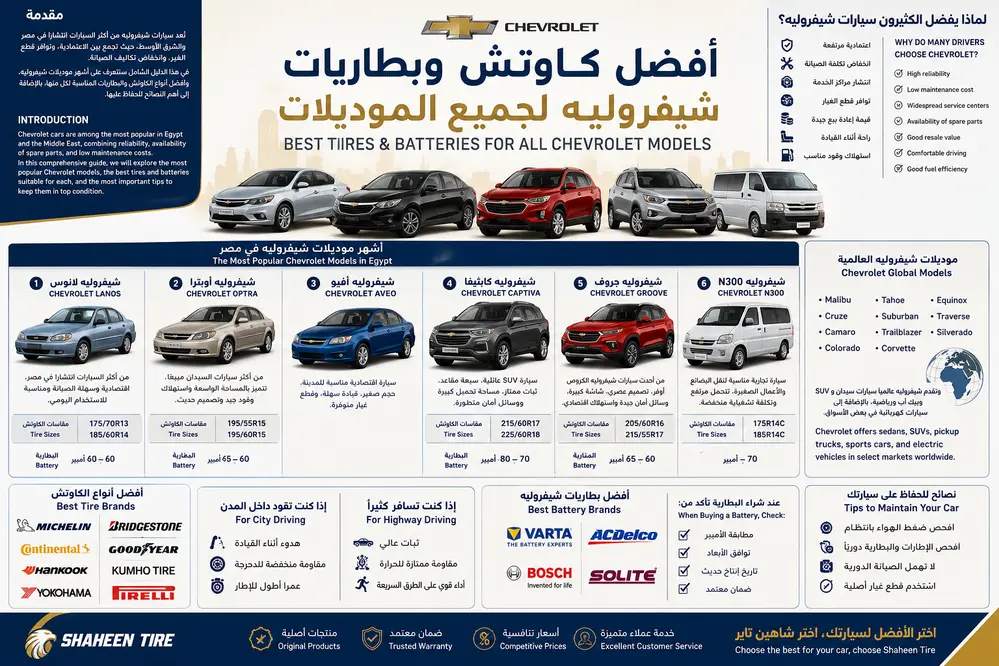
| Lanos | T100 / T150, 1997–2008 and the Egyptian-assembled cars that followed | 175/70 R13 · 185/60 R14 | 13-inch on base cars, 14-inch on higher trims. Both are genuine factory fitments. |
| Optra | J200 / Lacetti | 195/55 R15 | The most widely listed factory size. 195/60 R15 is an aftermarket upsize, not an OE fitment — it raises the car slightly and slows the speedometer. |
| Aveo | T250 and T300 differ | Check the door placard | The two generations do not share a fitment. Bring the car or send us a photo of the sticker. |
| Captiva (seven-seat SUV) | C100 / C140, 2006–2018 | 235/60 R17 · 235/65 R17 · 235/55 R19 | This is the tall seven-seater. It needs a 235-section tyre. Fitting a 215 or 225 here is under-tyring a heavy SUV. |
| Captiva (2021 onward crossover) | Current-shape car, same name, different vehicle | 215/60 R17 · 225/55 R18 | Completely unrelated to the old Captiva. Confirm which one you have before ordering. |
| Groove | 2020 onward | Check the door placard | We would rather not quote a size we have not confirmed on an Egyptian-market car. |
| N300 | Commercial van | Check the door placard | On a van the load rating matters as much as the size. See the section below. |
The Captiva trap
Chevrolet sold two entirely different vehicles under the name Captiva. The 2006–2018 car is a tall seven-seat SUV on 17- to 19-inch wheels wearing 235-section tyres. The 2021-onward car is a lighter crossover on 215 and 225 sections. They share a badge and nothing else.
If someone quotes you a Captiva size without asking which year you have, they are guessing. A 235-section tyre on the old car is not a style choice — it is the section width the car's weight and load rating were signed off against.
Reading the size on your sidewall
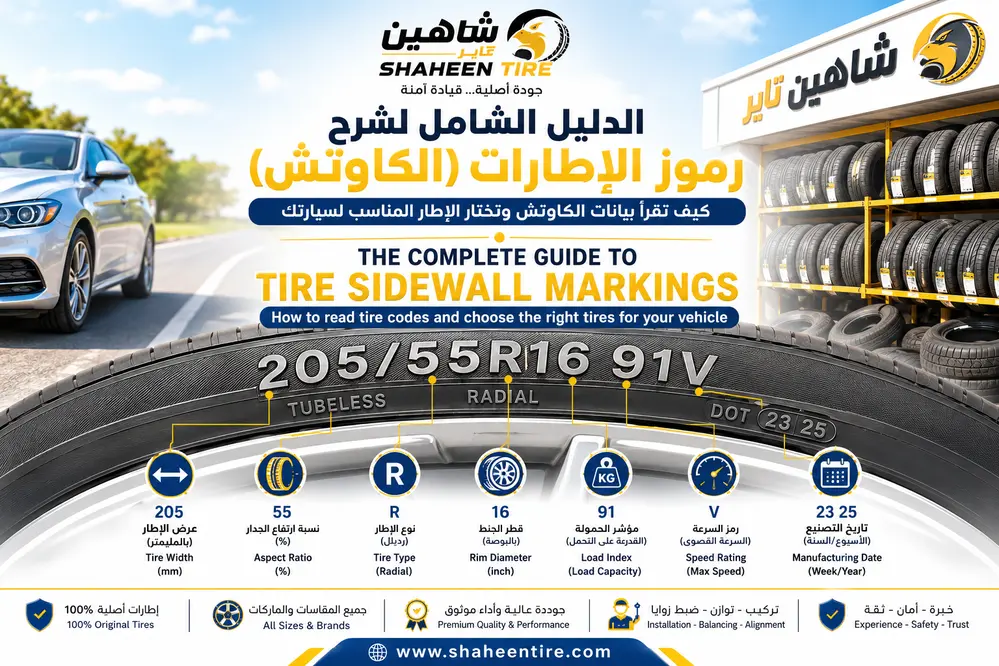
Take 195/55 R15 85V as the example:
| Part | Means | Why you care |
|---|---|---|
| 195 | Tread width in millimetres | Wider grips more and costs more fuel. Do not change it casually. |
| 55 | Sidewall height as a percentage of the width | Lower means sharper steering and a harder ride over Egyptian speed bumps. |
| R | Radial construction | Effectively every passenger tyre sold today. |
| 15 | Rim diameter in inches | Must match your wheel exactly. There is no flexibility here. |
| 85 | Load index | The weight one tyre may carry. Never go below the factory figure. |
| V | Speed rating | Never go below the factory rating. Going above is harmless. |
Also check the code — four digits giving the week and year of manufacture. 3624 means week 36 of 2024. A tyre that has sat in a warehouse for four years is old before you drive on it.
Choosing a brand at the same size
Once the size is fixed, the choice is about what you actually do with the car. Everything below is available in the common Chevrolet sizes.
| How you drive | What to prioritise |
|---|---|
| City only — Tanta, Cairo, short runs | Low rolling resistance and a quiet tread. You will replace these on age, not on wear, so pay attention to the DOT date. |
| Regular Delta and desert-road driving | Heat resistance and high-speed stability. The Cairo–Alexandria road in August is harder on a tyre than most European winters. |
| Loaded Captiva or a working N300 | Load index first, everything else second. A commercial van wants a reinforced or C-rated casing, not a passenger tyre in the same size. |
Michelin, Bridgestone, Continental and Goodyear sit at the premium end and generally last longer per pound spent. Hankook, Kumho and Yokohama are the value tier and are entirely adequate for a Lanos or an Optra that lives in the city. What matters more than the badge is that the size, load index and speed rating all match the placard.
Batteries for Chevrolet models
Battery fitment is not really about the make of car — it is about four things, and all four are printed on the battery already sitting in your engine bay.
| What to match | Why |
|---|---|
| Capacity in | Too small and it will not turn the engine over on a cold January morning. Going slightly larger is usually fine if it physically fits. |
| (cold cranking amps) | The real measure of starting power. Match or exceed the original figure. |
| Terminal position | Positive on the left or the right. Get this wrong and the cables will not reach. |
| Case size and hold-down | A battery that is not clamped down moves, and a moving battery cracks. |
Bring the old battery, or a photo of its label, and the match takes thirty seconds. Varta, Bosch, ACDelco and Solite are all sold in the sizes Chevrolet models use.
Check the manufacture date on the battery before you pay. A battery degrades on the shelf whether or not anyone has used it, and there is no reason to buy one that has already lost a year.
When to replace
Tyres
- Tread has worn down to the moulded wear bars sitting in the grooves.
- Cracking in the sidewall or between the tread blocks — heat and sunlight do this to tyres in Egypt long before the tread runs out.
- Any bulge or blister. That is a broken casing cord. Replace it now, not next week.
- Vibration that appears at a particular speed and is still there after balancing.
- The tyre is more than five or six years past its DOT date, however good the tread looks.
Batteries
- The engine turns over slowly, particularly first thing in the morning.
- Headlights dim noticeably at idle and brighten when you rev.
- The battery warning light comes on — which may equally mean the alternator, so have both tested.
- The terminals keep corroding after you clean them.
- It needs a jump start more than once.
Making them last
- Check pressures cold, at least monthly, against the figure on the door placard — not the number on the tyre, which is a maximum, not a recommendation.
- Rotate the tyres roughly every 10,000 km so the set wears evenly.
- Have the alignment checked after any serious pothole. Bad alignment eats a tyre's inner shoulder in a few thousand kilometres.
- Keep the battery terminals clean and tight, and have the alternator's charging voltage checked when the battery is tested. A weak alternator will kill a brand-new battery.
- If a car sits for weeks at a time, run it properly once a week rather than idling it in the street for five minutes.
Where to get it checked
If you are not certain which size or which battery your Chevrolet takes, bring the car to Shaheen Tire in Tanta and we will read the placard with you, check what is actually fitted, and tell you whether the last owner changed it. That conversation costs nothing and prevents the expensive mistake.