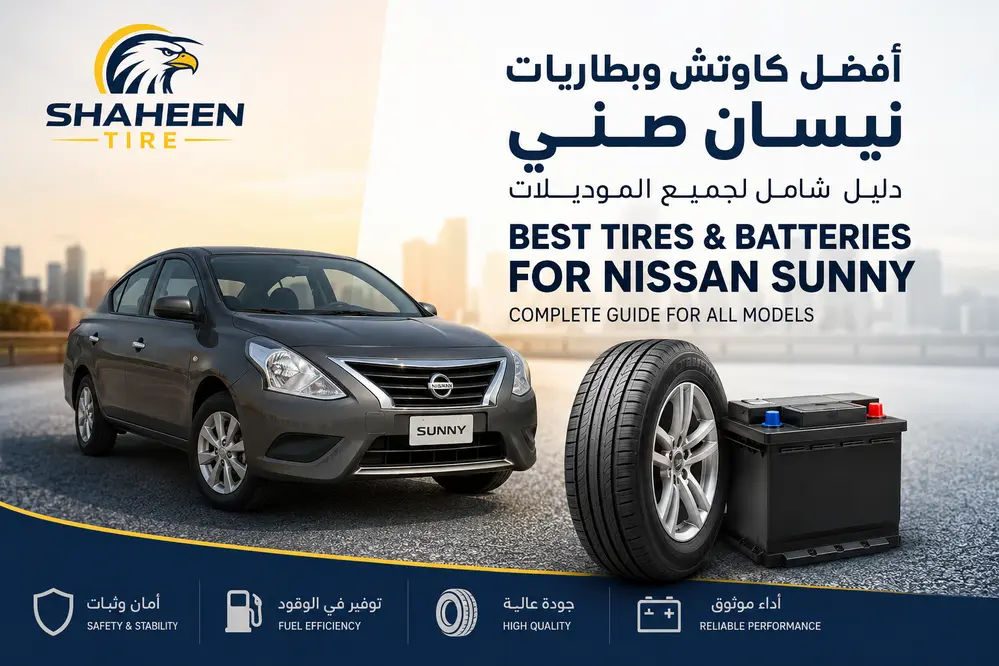
Tyres and batteries for the Nissan Sunny
The Sunny is a taxi, a first car, a family car and a delivery car all at once, and in Egypt it has been all of those for more than twenty years. That long run is exactly why tyre advice for it goes wrong: three genuinely different cars have carried the name, they wear wheels from 14 to 16 inches, and the old shape stayed on sale here long after it had been replaced elsewhere.
So the year on the licence is a starting point, not an answer. Below are the original sizes by generation, and how to settle it from the car itself in about ten seconds.
Sunny tyre sizes by generation
Find the shape and the year band, then confirm against your own car before you buy.
| Years | Generation | Original tyre sizes | How to recognise it |
|---|---|---|---|
| 2000–2006 (sold new in Egypt for years after) | N16 — the older, boxier shape | 175/70R14 | 14-inch wheels, tall sidewall, small hubcaps. Rides high and soft. |
| 2011–2020 | N17 — the rounded shape with the big boot | 175/70R14 · 185/65R15 | 14-inch on the base trim, 15-inch on the higher ones. Most Sunnys on the road in Egypt are this car. |
| 2020 onwards | N18 — the current, wider and lower shape | 195/65R15 · 205/55R16 | Sharper front end, wider stance. 15-inch on the base car, 16-inch above it. |
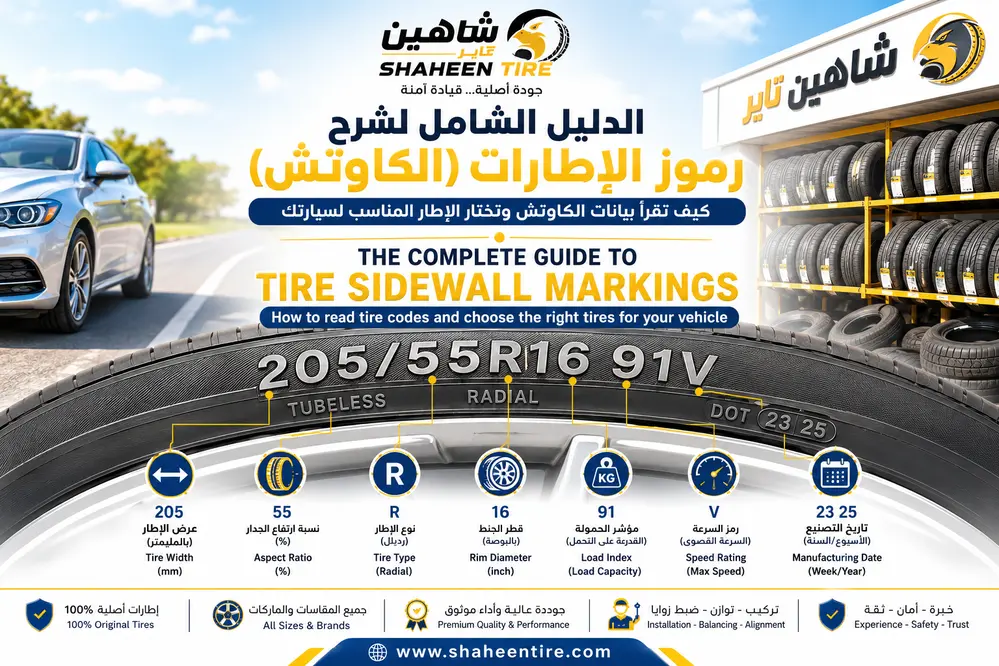
Ten-second check that beats every chart: open the driver's door and read the sticker on the door frame. It lists the size and the pressures that the factory set for your exact car. If the sticker is gone, the size is also moulded into the sidewall of the tyre currently fitted — but that only tells you what someone put on last, which is not always the same thing.
A note on 16-inch Sunnys
A 16-inch size is often quoted for "higher trims" of the Sunny, and it is worth being precise about it, because it is only true of one generation. 205/55R16 is an original size on the 2020-onwards car and on no earlier one. The N16 and the N17 were never sold on 16-inch wheels from the factory — the widest original size either of them wears is 185/65R15.
If your 2011–2020 Sunny is sitting on 16-inch wheels, they went on after it left the factory. That is not automatically wrong, but it is a modification, and it should be treated as one: check that the tyre clears the arch on full lock with the car loaded, and expect the ride to be firmer and the speedometer to read slightly off. Do not let anyone sell it to you as "the original size for your trim".
Choosing the tyre
The Sunny is light, front-heavy and often driven loaded — four adults and a boot full. That combination puts the load rating higher up the priority list than it would be on most cars this size.
- . Match the door sticker as a minimum. If the car works — taxi, delivery, permanently full — this is the number to be strict about, not the brand name.
- date code. Four digits giving the week and year of manufacture. Ask for it. Cheap tyres are often cheap because they are old stock, and rubber ages on a shelf.
- Speed rating. Match or exceed the sticker. There is no benefit to going below it and there is a real cost.
- Buy four, or at least two on the same axle. Never mix sizes across one axle.
When to replace
- The tread has worn down level with the wear bars sitting inside the grooves.
- Cracks in the sidewall rubber — common on Sunnys that spend the day parked in the sun.
- Any bulge on the sidewall. That is internal structural damage; the tyre comes off now.
- The car pulls to one side, or the front tyres are wearing on one edge only. Get the alignment checked before you spend on tyres, or you will wear the new set the same way.
The battery
The Sunny has a small petrol engine and a simple electrical system, so it does not need an expensive battery. It needs the right battery, and the specification differs between the three generations and even between markets within one of them.
Buy against the label, not the model year
Before you buy, read the battery already in the car and note four things:
- — the capacity. Match it, or go a little higher if it fits the tray.
- — the starting current. Match or exceed.
- Terminal side — which end the positive post is on. The cables will not stretch to the other side.
- Case dimensions — it must sit flat in the tray and clamp down tight.
We will not quote you an Ah figure off a model year, because the same Sunny year genuinely left the factory with more than one battery depending on where it was built for. The label in your engine bay is the specification.
Signs it is on the way out
- Slow cranking on the first start of the day.
- Headlights that dim noticeably at idle.
- The battery warning light — which may be the battery or may be the alternator. Have it tested before replacing anything.
- More than one jump start. Once a battery has been flattened right down, it rarely comes back fully.
Three to four years is a realistic life in Egyptian heat. If the car is a taxi doing short hops all day, expect the shorter end of that — the alternator never gets a long enough run to fully recharge it.
Making both last
- Check pressures cold, monthly, against the door sticker. A Sunny that carries passengers all day is often running underinflated, and underinflation destroys sidewalls in this heat.
- Rotate the tyres at each service — the fronts do nearly all the work.
- Have the alignment checked after any serious pothole.
- Keep the battery terminals clean and tight. A loose terminal imitates a dead battery convincingly.
- If the car sits unused for long stretches, run it properly once a week rather than idling it for five minutes.
Buying from Shaheen Tire
We are in Tanta and we see every generation of Sunny, including plenty of the old shape still working for a living. Bring the car, or send a photo of the door sticker and of your battery label, and we will match the specification exactly. If what you are asking for is an upsize rather than the original fitment, we will say so before it goes on the car — not after.